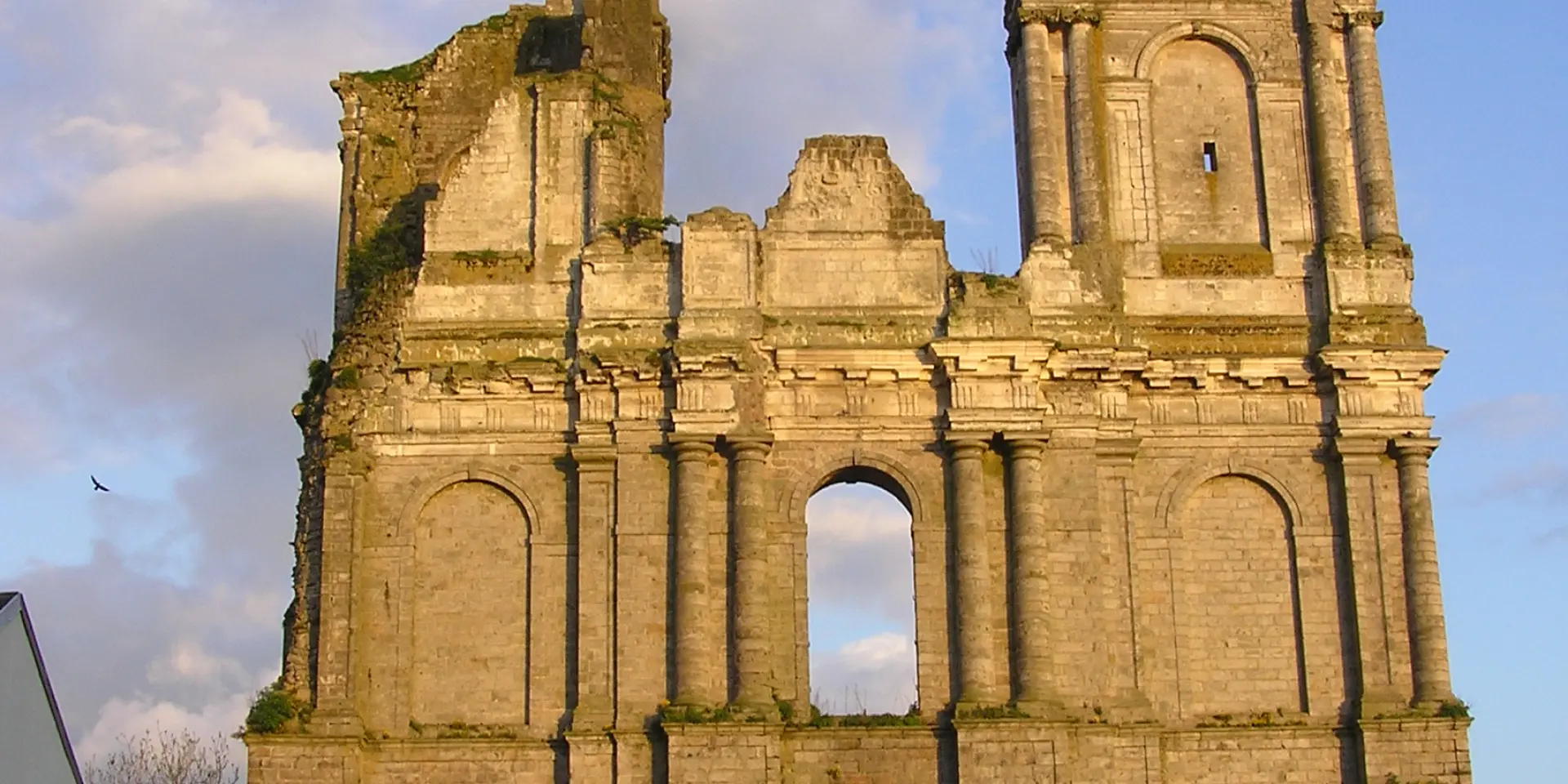
The ruined towers of the Abbey of Mont-Saint-EloiThe ruined towers of the Abbey of Mont-Saint-Eloi
©The ruined towers of the Abbey of Mont-Saint-Eloi|Arras Pays d'Artois Tourisme
Self DriveTwo days tour

2-Day WW1 Battlefield Tour in Artois: Complete Northern France Itinerary

Walk in their footsteps — with time to understand, not rush.

Two days in Artois allow you to move beyond highlights and into the deeper geography of the Western Front.
This self-drive itinerary is designed for travellers who want context, balance, and time to reflect — not just
check sites off a list.

You’ll explore the northern heights around Lens on Day 1, then follow the fighting south to Arras and the
Battle of Arras sector on Day 2.

Short on time?
See our 1-Day WW1 Tour in Artois: Vimy Ridge to Arras

Map & Overview

Your two day battlefield itinerary

Two days give you the freedom to slow down, go deeper, and explore the Western Front without rushing.
This self-drive itinerary is split into two clear geographic days — one centred around Lens,
the other around Arras.

Ideal if you’re travelling from Paris, Lille, or the UK — and want time for museums, cemeteries,
and moments of quiet reflection.

Ready to explore where they fought, waited, and are remembered?


Short on time? Explore our 1-day WW1 itinerary

Use this overview to plan your two days. You’ll spend Day 1 in the northern sector around Lens,
then follow the fighting south to Arras and the Battle of Arras sector on Day 2.

See all sites on our interactive map

Day 1 – Lens & the Northern Front

TimeSiteDuration
09:00Vimy Ridge Memorial1h30–2h
11:30Notre-Dame-de-Lorette & Ring of Memory1h30
13:00Lunch in Souchez or Ablain-Saint-Nazaire1h
14:30Neuville-Saint-Vaast German Cemetery30–45 min
15:30Mont-Saint-Eloi Abbey Towers20–30 min
16:15Cabaret-Rouge British Cemetery30–45 min
17:15Memorial 14-18 Notre Dame de Lorette45–60 min

Driving time between each stop: 10–20 minutes

Day 2 – Arras & the Southern Sector

TimeSiteDuration
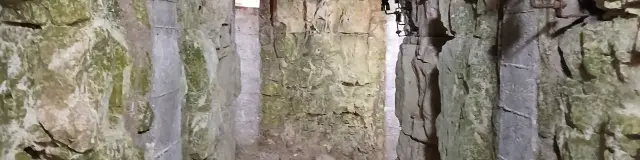
09:30 Wellington Quarry – The Tunnels of Arras 1h
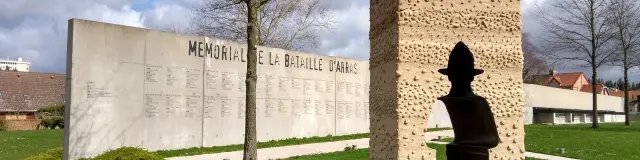
11:15 Faubourg d’Amiens Cemetery & Arras Memorial 45 min
12:30 Lunch in Arras city centre 1h–1h30
13:45 Arras City centre Flexible
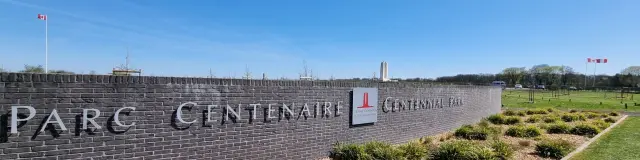
15:00 Loos British Cemetery & Dud Corner Memorial 30–60 min
16:15 Philosophe British Cemetery (optional) 30 min

Driving time between each stop: 5–30 minutes

Self-Drive 2-Day Tour

Step by step itinerary Day 1

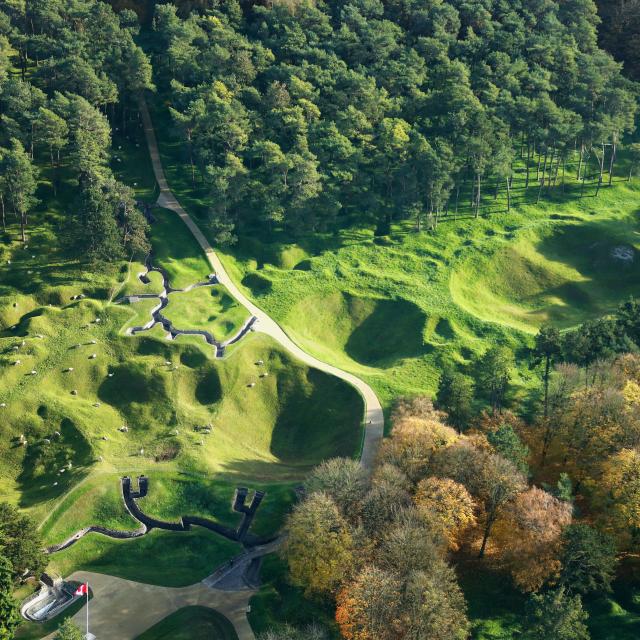
Vimy Ridge Memorial

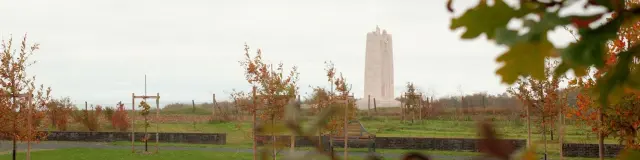
Canada’s most iconic WW1 memorial stands on the very battlefield it commemorates.
Its twin pylons rise above the Douai Plain — the same landscape Canadian soldiers crossed in April 1917.

What to see

Preserved front-line and support trenches

Visitor Centre with free exhibitions and artefacts

The monument bearing 11,285 names of Canadian soldiers with no known grave

Optional guided tours in English

Practical details

Duration: 1h30–2h

Parking: Free on site

Facilities: Toilets, picnic area

Accessibility: Monument paths accessible; trenches uneven

Travel tip: From Vimy, it’s a 10–12 minute drive south to Notre-Dame-de-Lorette.

Notre-Dame-de-Lorette & Ring of Memory

France’s largest national necropolis — and one of the most powerful remembrance sites on the Western Front.

What to see

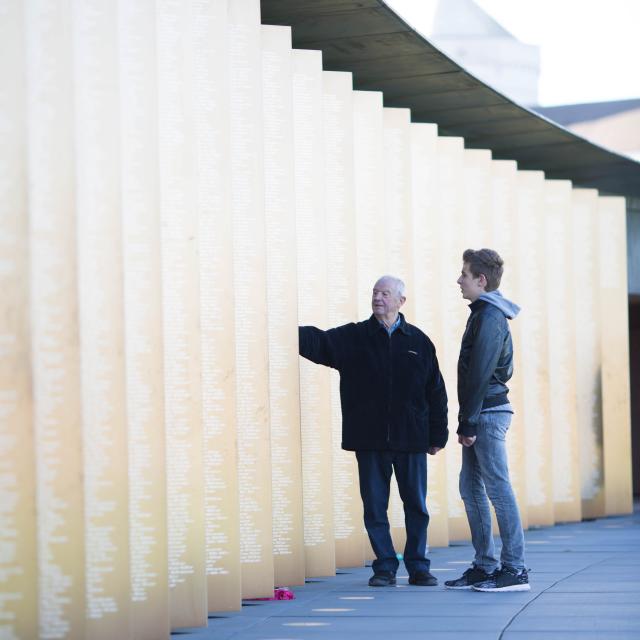
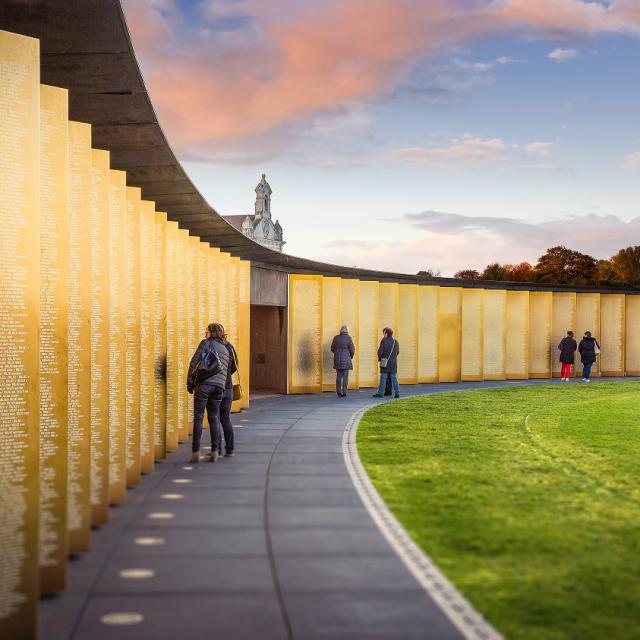
The Ring of Memory with 580,000 names engraved alphabetically

French military cemetery

Basilica and lantern tower

Musée Vivant 14-18 (ossuary museum)

Practical details

Duration: 1h30

Parking: Free

Accessibility: Excellent, flat paths

A practical and calm stop between memorials.
Eat before 14:00 — many local restaurants close in the afternoon.

A striking contrast to Commonwealth cemeteries.
Dark basalt crosses mark mass graves holding over 44,000 German soldiers.

Why it matters

Humanises the conflict across enemy lines

Offers a different visual and emotional experience

Duration: 30–45 minutes

Mont-Saint-Eloi Abbey Towers

Ruins of a medieval abbey used as an observation point during WW1.

Why stop here

Panoramic views over former battlefields

Short visual pause between cemeteries

Duration: 20–30 minutes

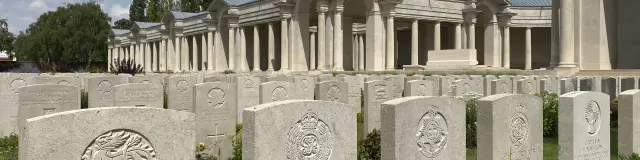
One of the most moving CWGC cemeteries in northern France.

What to see

Over 7,600 Commonwealth burials

Replica headstone of the Canadian Unknown Soldier

Impeccable CWGC landscaping

Duration: 30–45 minutes

Memorial 14-18 – Notre-Dame-de-Lorette

A modern interpretation space focusing on:

Soldiers’ lives

Civilian experience

Memory and reconciliation

Duration: 45–60 minutes
A reflective end to the first day before returning to Lens or Arras.

Self-Drive 2-Day Tour

Step by step itinerary Day 2

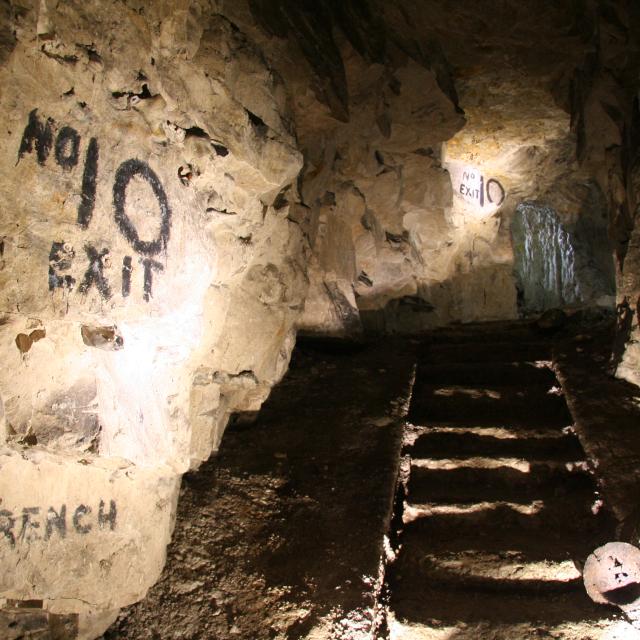
An immersive underground experience beneath the streets of Arras.
Pre-booking essential.

What to expect

20 metres underground in original chalk tunnels

Multimedia storytelling of the Battle of Arras (1917)

Soldiers’ testimonies and reconstructed environments

Practical details

Duration: 1 h30

Temperature: 12°C year-round

Accessibility: Not suitable for wheelchairs

Faubourg d’Amiens Cemetery & Arras Memorial

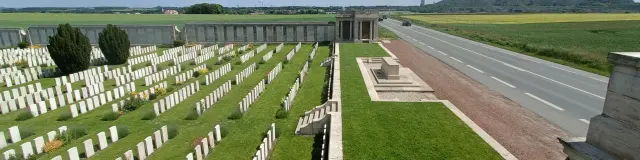
A quieter CWGC cemetery near the city centre.

Why stop here

Over 2,600 Commonwealth burials

Memorial listing nearly 35,000 missing soldiers

Easy walk from Wellington Quarry

Duration: 45 minutes

Arras was almost entirely destroyed during WW1 and rebuilt brick by brick.

Don’t miss

Grand’Place & Place des Héros

Flemish-style façades

Cafés and brasseries ideal for a proper break

Loos British Cemetery & Dud Corner Memorial

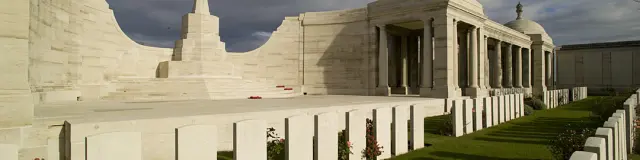
One of the most important British remembrance sites on the Western Front.

What to see

British Cemetery (3,000+ burials)

Dud Corner Memorial listing 20,000 missing soldiers

Interpretation panels on the Battle of Loos (1915)

Historical context
Britain’s first use of poison gas — with devastating consequences.

Duration: 30–60 minutes

Philosophe British Cemetery (optional)

A small, peaceful cemetery often missed by visitors.

Why visit

719 Commonwealth burials

Extremely quiet, reflective atmosphere

Ideal final stop before returning to Lens

Duration: 30 minutes
Practical Information for a 2-Day Self-Drive Tour

FAQ

  • Time management & pacing

    This itinerary is designed to be realistic and unrushed.

    Expect 7–8 hours on the road and sites each day, including breaks
    Distances are short, but emotional fatigue is real — especially on Day 2
    Allow flexibility: it’s perfectly fine to skip one optional cemetery if needed
    Plan to finish both days by late afternoon, not early evening
    Two days gives you space to absorb, reflect, and rest — which is essential for remembrance travel.

  • Booking & advance planning

    Some visits require anticipation:

    Wellington Quarry (Arras Tunnels):
    Booking in advance is strongly recommended, especially between April and September.
    Museums & interpretation centres:
    Opening hours may vary seasonally — check the day before.
    Accommodation:
    Arras fills up quickly in peak season and around Remembrance dates (April, July, November).
    Book accommodation first, then lock in Wellington Quarry, then build the rest of the route around it.

  • Facilities & comfort on site

    Facilities vary widely between locations:

    Toilets:
    Available at major sites (Vimy Visitor Centre, Lorette, Wellington Quarry),
    rarely available at smaller cemeteries.
    Food & water:
    Rural areas have limited options — carry water and snacks.
    Seating:
    Benches are common at memorials, rare in smaller cemeteries.
    A small daypack makes the experience far more comfortable.

  • Accessibility & physical effort

    This is a walking itinerary, but at a gentle pace.

    Most cemeteries are flat and accessible
    Gravel paths are common — sturdy shoes recommended
    Vimy trenches and Wellington Quarry involve steps and uneven ground
    Two days allow visitors with reduced mobility to rest between sites
    If accessibility is a concern, monuments alone still provide a powerful experience.

  • Weather & conditions on the battlefield

    Artois is exposed and weather can change quickly.

    Wind is common on ridges (Vimy, Lorette)
    Rain can make gravel paths slippery
    Underground sites remain cold year-round (12°C at Wellington Quarry)
    Dress in layers, even in summer.

  • Respectful behaviour & photography

    These are active sites of remembrance.

    Speak quietly
    Stay on marked paths
    Do not touch or sit on headstones
    Photography is welcome, but avoid posed or inappropriate images
    Ceremonies may take place without prior notice — observe respectfully
    Many visitors find smaller cemeteries especially moving — allow silence.

  • Personal research & remembrance

    If you are visiting for family reasons:

    Note grave or panel references in advance
    Allow extra time at one or two key cemeteries
    Bringing a small poppy, flower, or note is a personal choice
    Journaling at the end of each day helps process the experience

  • Connectivity & navigation

    Mobile coverage is generally good
    Download offline maps before departure
    Signage to smaller cemeteries can be discreet — GPS is helpful
    Expect quiet rural roads rather than major highways

  • Who this itinerary is best suited for

    This 2-day route works particularly well for:

    Visitors seeking depth rather than speed
    Families tracing ancestors’ footsteps
    Educators, students, and researchers
    Seniors who benefit from a slower pace
    Travellers combining history with a short regional stay