Only have a day? This guided route helps you explore the most powerful WW1 sites in a single, meaningful visit.
Ideal if you’re coming from Paris, Lille, or the UK — and want to make every hour count.Ready to walk where they fought, fell, and are remembered?
Looking for a longer stay? Explore our 2-day itinerary
Use this overview to plan your day. You’ll start in the north at Vimy Ridge, loop through key memorials,
and end in Arras.
See all sites on our interactive map
Day 1 – Lens & the Northern Front
| Time | Site | Duration |
|---|---|---|
| 09:00 | Vimy Ridge Memorial | 1h30–2h |
| 11:30 | Notre-Dame-de-Lorette & Ring of Memory | 1h30 |
| 13:00 | Lunch in Souchez or Ablain-Saint-Nazaire | 1h |
| 14:30 | Neuville-Saint-Vaast German Cemetery | 30–45 min |
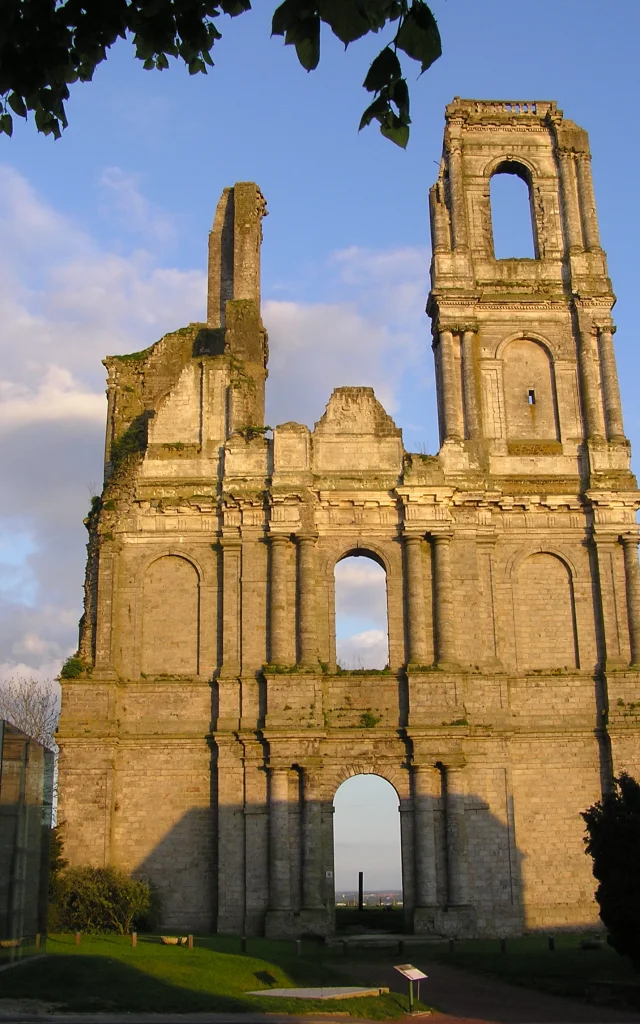
| 15:30 | Mont-Saint-Eloi Abbey Towers | 20–30 min |
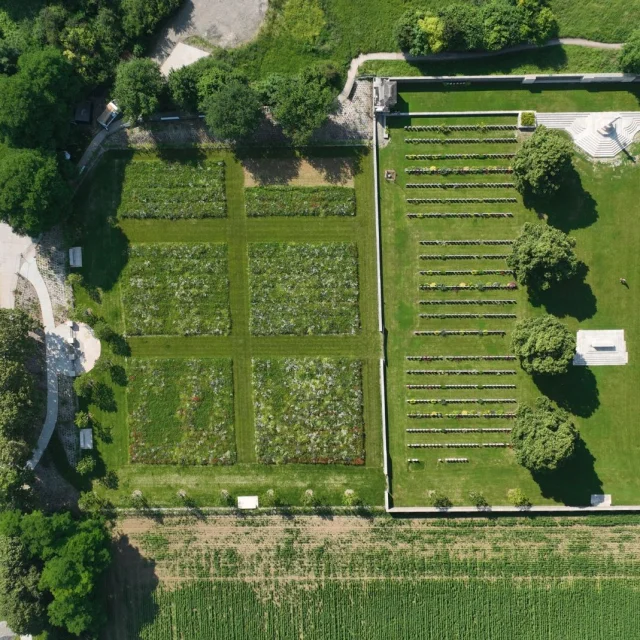
| 16:15 | Cabaret-Rouge British Cemetery | 30–45 min |
| 17:15 | Lens 14-18 Mining Memorial | 45–60 min |
Driving time between each stop: 10–20 minutes
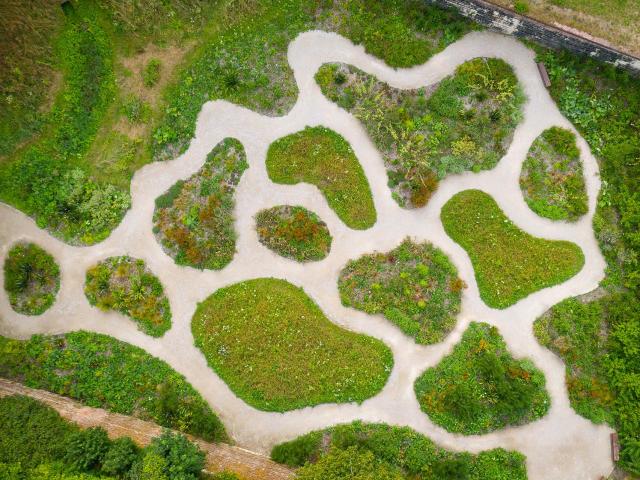 Le Quesnoy Jardin De La Paix Neo Zelandais Rangimarie Art Jardins Hauts De France Yann Monel 7 1920x1279
Step-by-Step Itinerary
Vimy Ridge Memorial
Canada’s most iconic WW1 site stands on the very battlefield it commemorates.
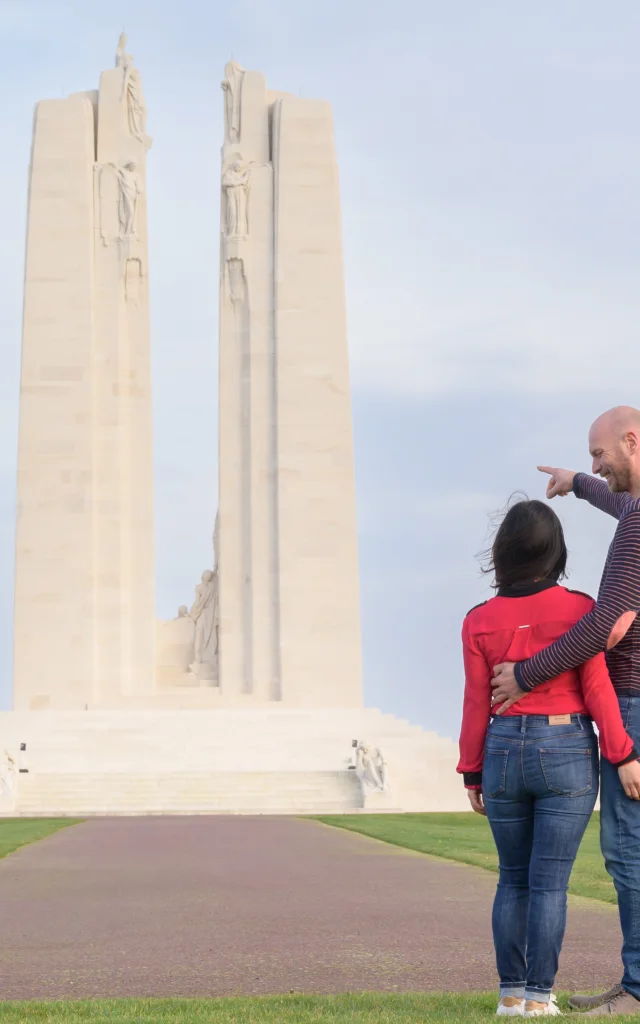
The memorial’s twin pylons rise 30 metres above the ridge, visible for kilometres across the Douai Plain, the same view Canadian soldiers had in April 1917.
What to see:
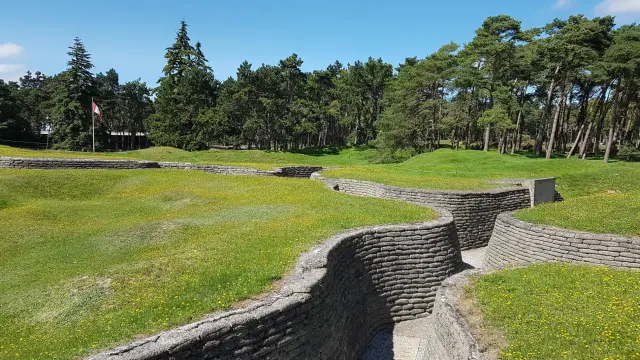
- Preserved trenches: Walk through authentic front-line and support trenches, connected by communication passages. The landscape still bears the scars of shellfire.
- Visitor centre: Free exhibitions explain the Battle of Vimy Ridge, including personal stories and recovered artefacts.
- The monument: 11,285 names of Canadian soldiers with no known grave are carved into the limestone base.
- Guided tours: Available in English (check times on arrival) — or explore independently with the information panels.
Practical details:
- Duration: 90 minutes
- Parking: Free on-site
- Facilities: Toilets, picnic area
- Accessibility: Paths around the monument are paved; trenches involve uneven ground and steps
“It’s Canada’s tribute — to courage, loss, and a defining moment in its history.”
Travel tip: From Vimy, it’s a 15-minute drive south to Notre-Dame-de-Lorette.
 Panoramic view of the Canadian National Historic Site at Vimy, surrounded by pine trees planted in memory of the fallen.
Notre-Dame-de-Lorette & the Ring of Memory
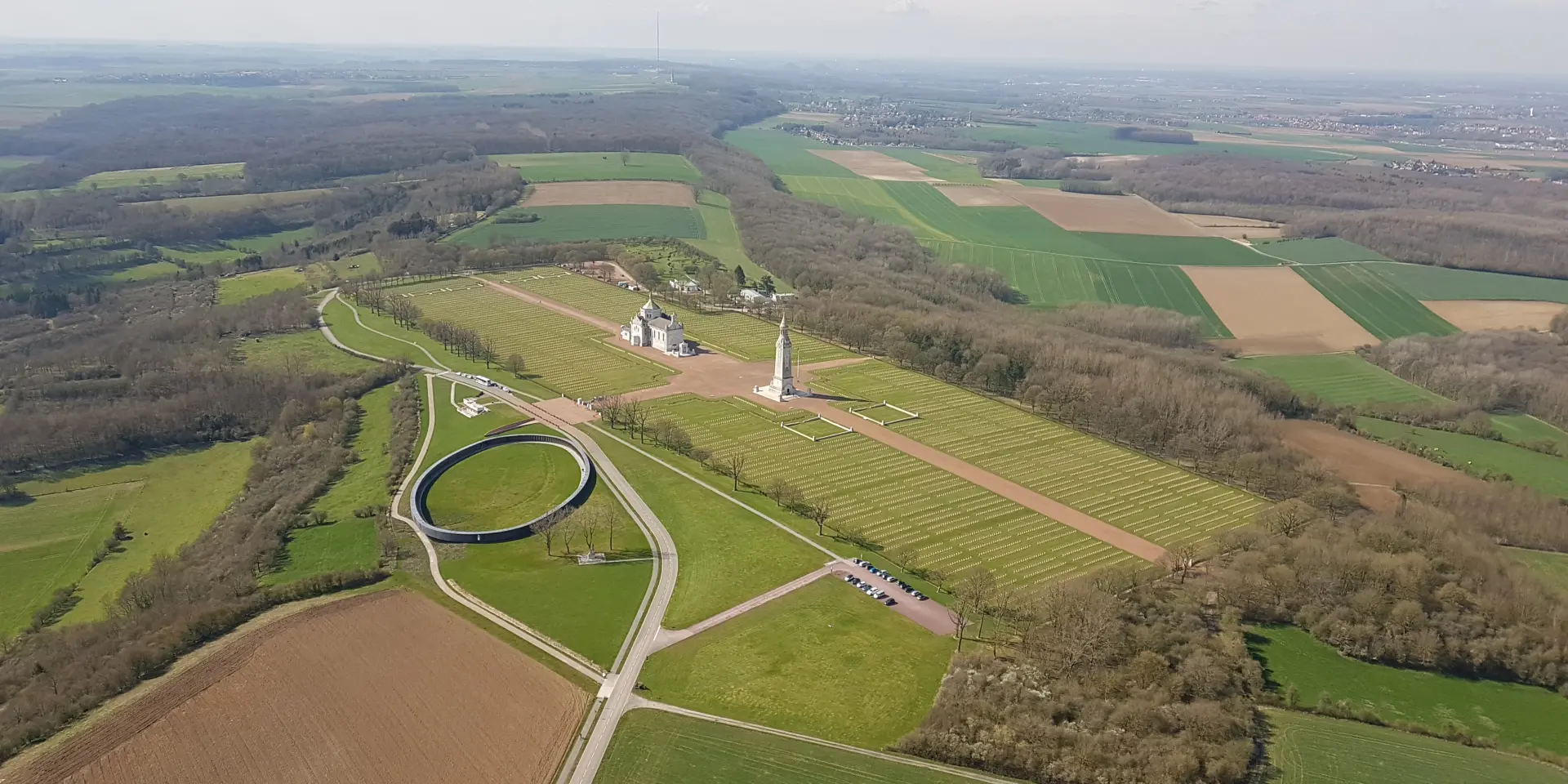
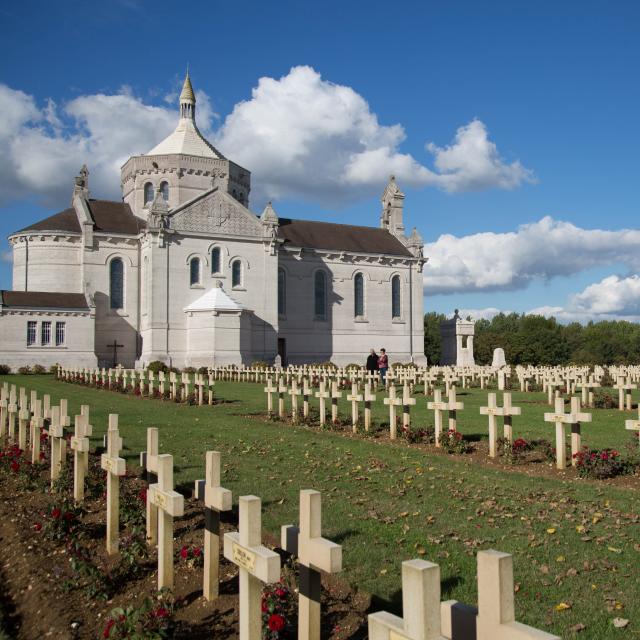
A vast necropolis sprawls across the hilltop — home to over 40,000 fallen soldiers,
making it France’s largest national cemetery. The landscape itself tells the story:
rows of white crosses, a towering lantern tower, and the contemporary Ring of Memory encircling it all.
What to see:
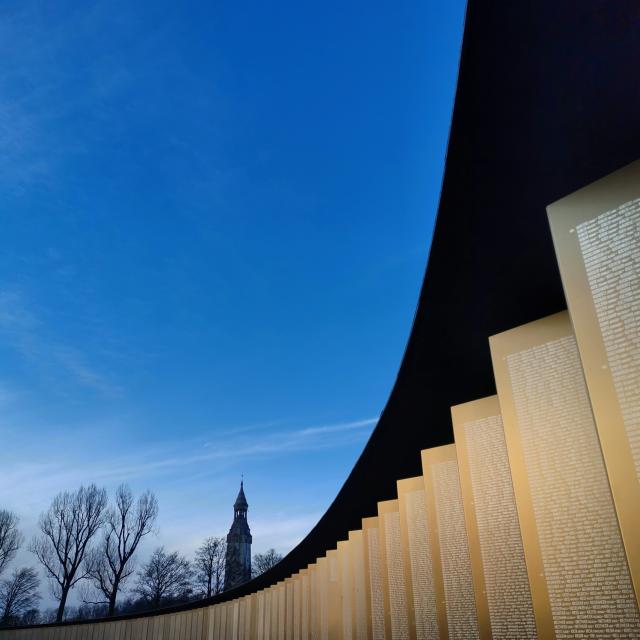
- The Ring of Memory: A striking elliptical memorial listing 579,606 names of soldiers
from 40 nations who died in the Nord-Pas-de-Calais region. Names are arranged alphabetically,
without distinction of rank, nationality, or allegiance — a powerful symbol of shared sacrifice. - The basilica and lantern tower: Built in the 1920s, the neo-Byzantine basilica honours the fallen.
Climb the tower for panoramic views over the battlefield. - Musée Vivant 14-18: A small but moving museum inside the ossuary,
with uniforms, letters, and multimedia displays. - The cemetery: Take time to walk among the graves. Many bear the inscription “Mort pour la France.”
Practical details:
- Duration: 75 minutes
- Parking: Large free car park near the Ring of Memory
- Facilities: Toilets, small café (seasonal)
- Accessibility: Ring of Memory and main paths fully accessible; cemetery paths may have gentle slopes
Historical note: The hill of Notre-Dame-de-Lorette was fiercely contested throughout 1915.
French forces captured it in May after weeks of brutal fighting — at the cost of tens of thousands of lives.
Travel tip: Lunch options are 5–10 minutes away in Souchez or Ablain-Saint-Nazaire.
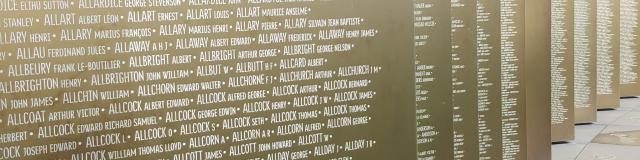 Names of fallen soldiers engraved on the panels of the Ring of Remembrance
Refuel in nearby villages like Souchez, Ablain-Saint-Nazaire, or Lens. These quiet communities sit in the heart of the former battlefield, and many local establishments understand the rhythm of remembrance tourism.
Where to eat:
Le Souchez Memorial 14-18
– Small brasserie offering regional specialities, located right next to the memorial.
Estaminet de Lorette – L’Abri des visiteurs
– Friendly café in Ablain, with WW1 photos on the walls and a local, authentic menu.- Lens town centre – More options, including boulangeries for a quick picnic.
Local dishes to try:
- Welsh – A comforting dish of melted cheddar over toast with ham — a northern French classic.
- Potjevleesch – Traditional terrine of rabbit, chicken, and pork in aspic.
- Tarte au sucre – Sweet tart for dessert.
Duration: Allow 1 hour to eat and recharge before the afternoon visits.
 L'Estaminet de Lorette / L'Abri des visiteurs © Pidz / OTLL
A striking contrast to the sites you’ve just visited. This German military cemetery is marked by dark basalt crosses, low stone walls, and austere landscaping. Nearly 45,000 German soldiers are buried here — many in mass graves marked by simple crosses bearing multiple names.
What makes it different:
- The aesthetic: Deliberately sombre, reflecting German memorial traditions of the 1920s–30s
- Mass graves: Unlike Commonwealth cemeteries with individual headstones, many soldiers here share graves — a reminder of the scale of loss
- The crosses: Dark and angular, inscribed in Gothic script
- A place for reflection: Fewer visitors come here, making it a quieter, more contemplative space
Why visit:
This cemetery reminds us that war’s tragedy crossed all lines. Young men from Saxony, Bavaria, and Prussia lie here, far from home — just as British, Canadian, and French soldiers do nearby.
Practical details:
- Duration: 30 minutes
- Parking: Roadside parking near entrance
- Facilities: None on-site
- Accessibility: Mostly flat, gravel paths
Travel tip: It’s a 20-minute drive from here into Arras for your final main stop.
 German Cemetery Memory Sites
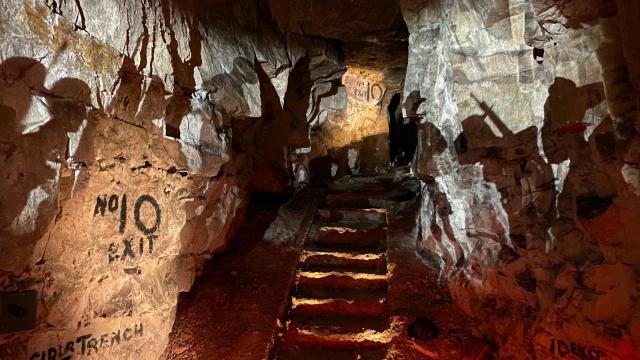
Under the streets of Arras lies a secret world: 20 kilometres of chalk tunnels where 24,000 Allied troops waited in darkness before the Battle of Arras on 9 April 1917. This underground museum takes you 20 metres below ground for an immersive guided tour.
What to expect:
- Guided tour only: The 1h20 visit (available in English) includes a 45-minute descent and a 10-minute historical film projection
- Limited group size: Maximum 17 people per visit, with regular departures throughout the day
- The tunnels: Explore original chalk-carved passageways used as barracks, kitchens, and hospitals
- The story: Learn how British and New Zealand tunnellers secretly prepared this subterranean city, allowing troops to emerge directly onto the battlefield — surprising German defenders
- Multimedia experience: Testimonies, ambient sound, and historical footage bring the tunnels to life
Practical details:
- Duration: 1 hour 20 minutes (including film and surface exhibition)
- Booking: Strongly recommended, especially in summer and on weekends — the site has limited capacity
- Parking: Available directly next to the entrance
- Facilities: Toilets, small shop
- Accessibility: Not suitable for wheelchairs or those with mobility issues (stairs, uneven ground, low ceilings)
- Temperature: 12°C year-round — bring a jacket
To learn more about this extraordinary underground site, visit our dedicated page on
the Arras tunnels of the Battle of 1917
.
17:00 – Arras: Faubourg d’Amiens Cemetery & City Centre
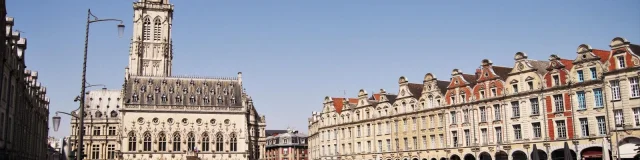
End your day in Arras with a visit that combines remembrance and everyday life. From one of the most significant memorial sites of the Battle of Arras to the lively city centre, this final stop offers both reflection and perspective.
Option 1: Faubourg d’Amiens Cemetery & Arras Memorial
Located near the Arras Citadel, the Faubourg d’Amiens Cemetery is one of the most important Commonwealth memorial sites of the Battle of Arras. Established in 1916, it contains the graves of more than 2,600 Commonwealth soldiers, alongside a small number of German prisoners of war.
At the entrance stands the Arras Memorial, bearing the names of 34,785 British, New Zealand and South African soldiers who fell in the Arras sector and have no known grave. Canadian names are commemorated at Vimy, and Australians at Villers-Bretonneux.
What to see:
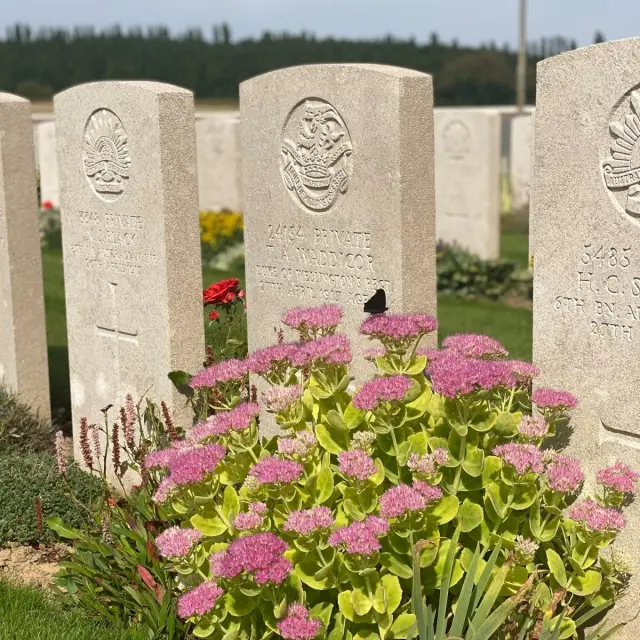
- The military cemetery with its aligned headstones
- The Arras Memorial to the Missing
- The Arras Flying Services Memorial, dedicated to airmen lost during “Bloody April” 1917
Duration: Around 45 minutes to 1 hour
Parking: Nearby street parking
Accessibility: Fully accessible
Option 2: Arras City Centre
After visiting the memorial sites, take time to explore Arras itself. Rebuilt after the war, the city blends Flemish-inspired architecture with a relaxed atmosphere, offering cafés, shops and open squares where history meets everyday life.
What to see:
- The Grand’Place and Place des Héros with their distinctive façades
- The Belfry of Arras, a UNESCO World Heritage site
- Outdoor cafés and restaurants for a relaxed end of day
Duration: Flexible
Parking: Public car parks in the city centre
Accessibility: Generally accessible
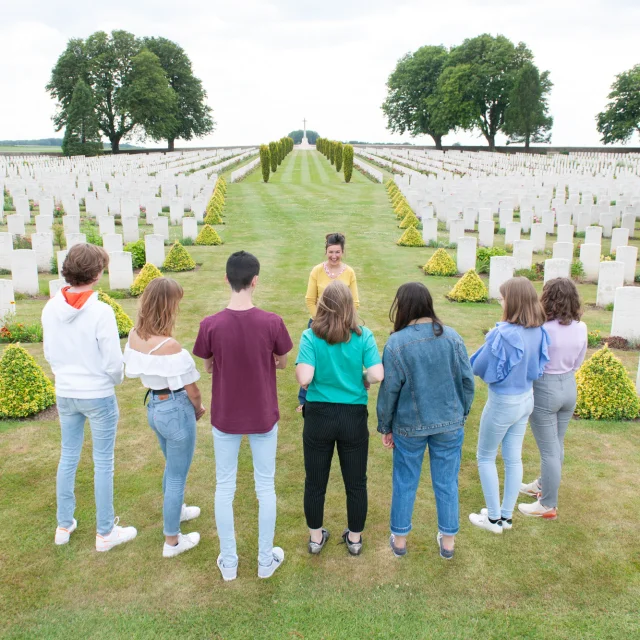
 Family visiting the cemetery
 View of soldiers' graves
 Arras-country-artois-tourism
Practical Information & Tips
 Preserved WW1 trenches on Vimy Ridge
Getting to Artois from Abroad
From the UK:
The Artois region is highly accessible for British visitors — often easier than you might expect.
- Eurostar to Lille: Direct trains from London St Pancras (1h20). From Lille, it’s a 30-minute drive to the first sites or a short connecting train to Arras (30 min) or Lens (20 min).
- Ferry or Tunnel to Calais or Dunkirk: P&O, DFDS, and Irish Ferries operate daily crossings.With Le Shuttle, cross the Channel within 35 minutes. From Calais, it’s a 45-minute drive to Vimy Ridge.
- Flight to Lille Airport: Limited international flights, but connections available via Paris or Brussels.
From Canada, Australia, or New Zealand:
Most visitors fly into Paris Charles de Gaulle (CDG), then travel north:
- TGV direct from CDG Airport to Arras: 48 minutes (no need to go into central Paris)
- TGV from Paris Gare du Nord to Arras: 50 minutes
- TGV to Lens: 1h05 from Paris
- Car hire: Available at CDG, Paris, Lille, Arras, or Lens stations
Why rent a car?
Public transport between WW1 sites is extremely limited. A rental car offers flexibility, allows you to visit at your own pace, and provides space for any elderly or less mobile companions. Most major providers operate at train stations.
Driving in France — what to know:
- Drive on the right
- Sat-nav or smartphone GPS recommended — it makes navigating rural roads easier and helps locate smaller sites
- Petrol stations less frequent in countryside — fill up in Arras or Lens
- Parking free at all memorial sites
- Speed limits: 50 km/h in towns, 80 km/h on rural roads, 130 km/h on motorways
FAQ – Planning Your 1-Day WW1 Visit
- Can I do this without a car?
Not recommended. Sites are rural and spaced out. A rental car gives you flexibility, comfort, and access to places off the main routes.
- Are the sites free and open year-round?
Most memorials and cemeteries are free and always open. Museums and guided sites may require tickets and have seasonal hours.
- Do I need to book in advance?
Only for the Wellington Quarry. Visitor numbers are limited and tours often sell out, especially in summer and on weekends.
- Are there toilets on-site?
Yes — at Vimy Ridge Visitor Centre, Notre-Dame-de-Lorette, and Wellington Quarry. Other cemeteries like Loos or Neuville-Saint-Vaast may not have facilities. Plan ahead by using cafés or town centre stops.
- Where can I park?
Parking is free and generally easy at all sites. Larger locations have dedicated car parks; smaller cemeteries have roadside lay-bys.
- Can I visit with children?
Yes. Many sites have interpretive panels, accessible paths, and a calm atmosphere. Just keep a close eye on young ones near trenches or monuments.
- Is it accessible for seniors or people with limited mobility?
Partially. Sites like Vimy, Lorette, and Loos are mostly flat and accessible. The Wellington Quarry is not recommended for those with mobility issues. Benches are available at most locations. Plan rest stops and skip trench areas if needed.
- What should I wear and bring?
- Comfortable walking shoes (avoid sandals)
- Layered clothing — weather changes fast
- Rain jacket or umbrella
- Water, snacks, any medications
- Camera, tissues, hand sanitiser
- Notebook or journal (many visitors like to reflect)
- When is the best time to visit?
April–June: Mild weather, symbolic spring battles
September–November: Fewer crowds, autumn light, Remembrance Day
July–August: Peak season — book ahead
December–March: Cold but atmospheric. Some museums may reduce hours - What is the etiquette at memorial sites?
- Speak quietly, especially in cemeteries
- Stay on marked paths
- Don’t touch or remove tributes
- Supervise children closely
- Photography is welcome — be respectful
- Emergency contacts
Emergency services (France): 112
UK Embassy in Paris: +33 1 44 51 31 00
Canadian Embassy in Paris: +33 1 44 43 29 00
Australian Embassy in Paris: +33 1 40 59 33 00
New Zealand Embassy in Paris: +33 1 45 01 43 43
You’ve come a long way to be here. Take your time, stay comfortable, and remember — this journey is as much about honouring their memory as it is about understanding history.
Make It More Than a Day Trip


 Loos British Cemetery Extension Cwgc 1
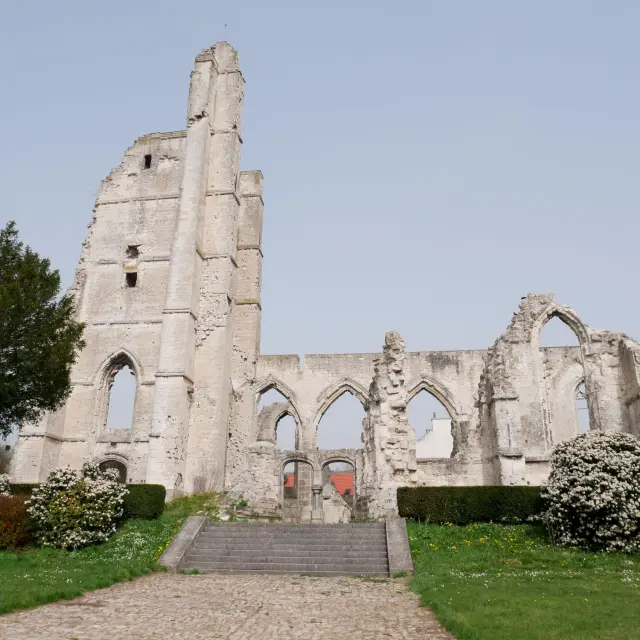 Ruines De Leglise Dablain St Nazaire S. Roynette Lens Lievin Tourisme
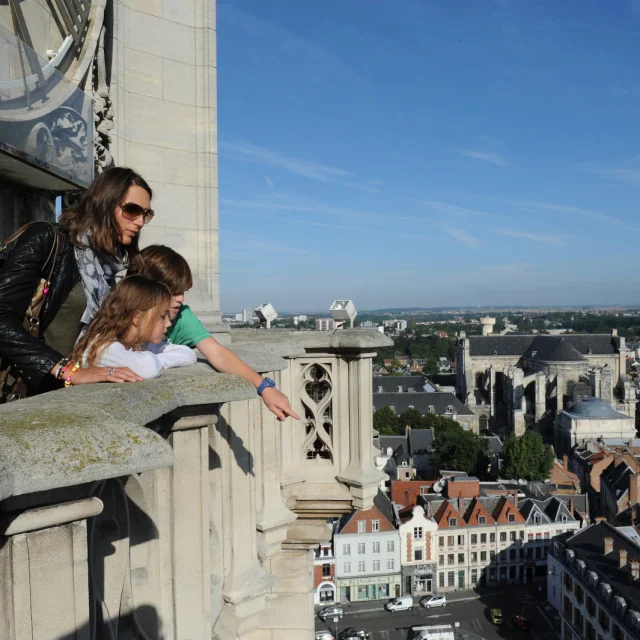 Belfry
 IMG_3729
 Grevillers British Cemetery
 Ring of Memory / Ablain-Saint-Nazaire
 French National Necropolis of Notre Dame de Lorette